
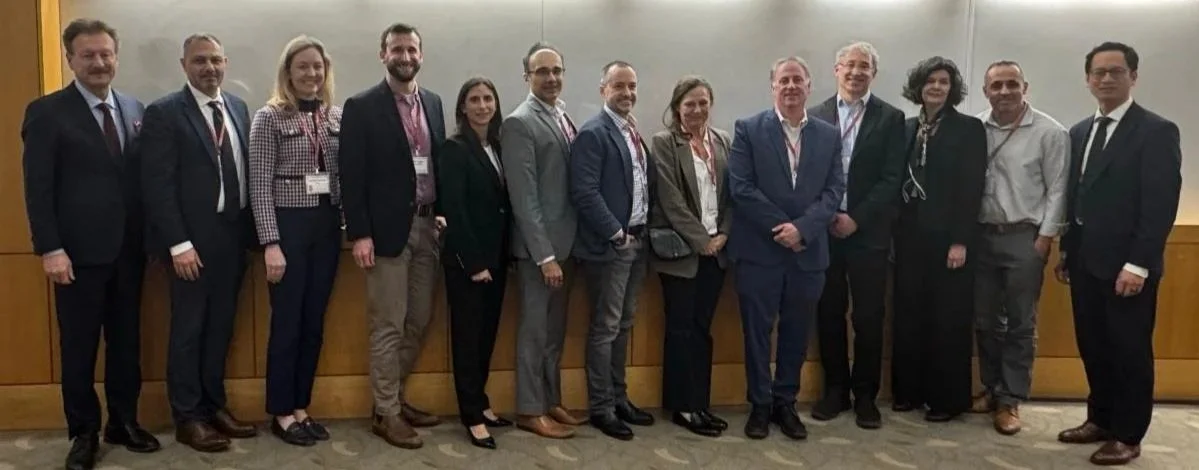
Symposium presenters with Diana Oehrli
Brain science is having a moment — and we had a front-row seat.
We recently spent a day at Brown University for a symposium on deep brain stimulation. The researchers there are doing work that could change lives for people living with depression, chronic pain, Parkinson's, and more. We funded this event, and we're still buzzing from it.
How can interventions in the human brain alleviate physical and emotional suffering? This inquiry, which prioritizes improved physical and emotional health, was the thread that ran through a recent symposium presented by the Norman Prince Neurosciences Institute in collaboration with Brown University's Department of Neurosurgery and the Carney Institute for Brain Science. Presenters from across the country* described their groundbreaking research in treating a range of conditions, including major depression, obsessive compulsive disorder, chronic pain, and Parkinson's disease. Practitioners and students in the audience had the unique opportunity to consider how residents of our Rhode Island community may benefit from this research.
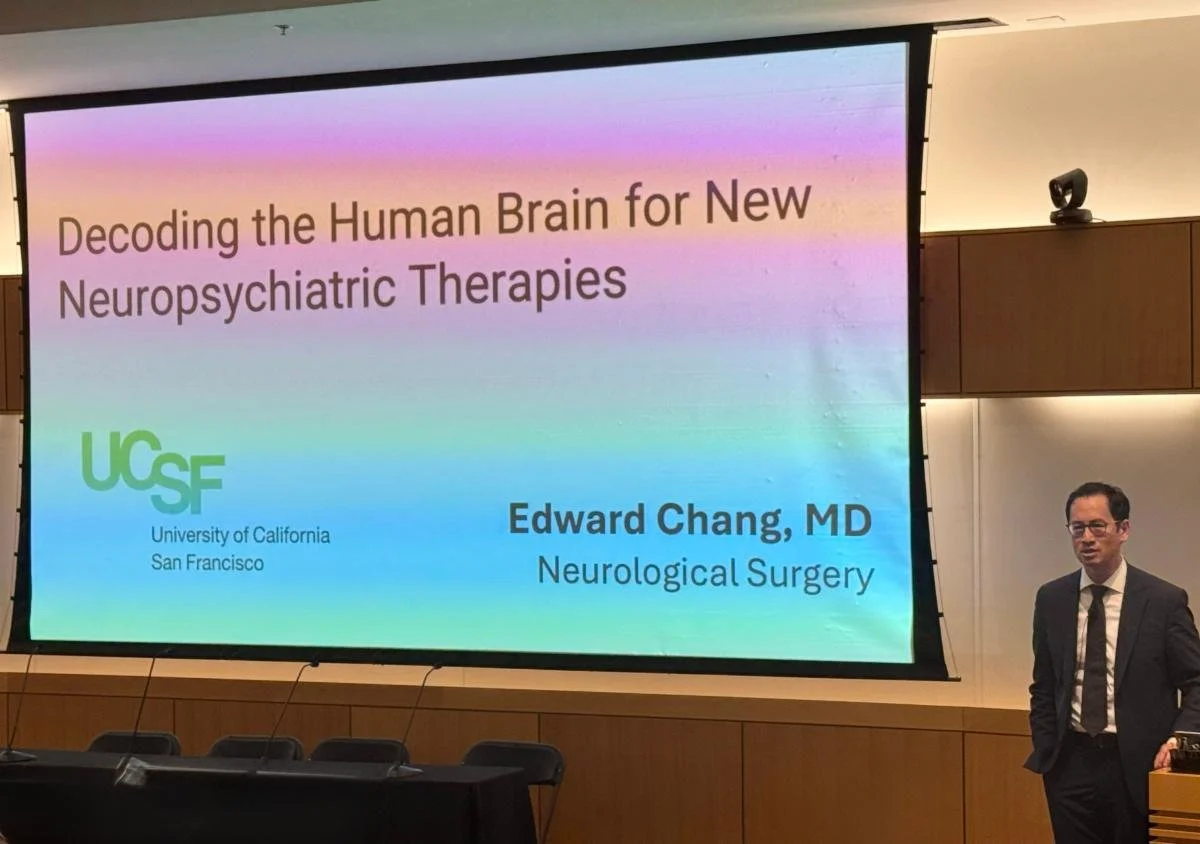
Dr. Edward Chang delivering symposium keynote
Keynote speaker Dr. Edward Chang led the event by naming the concept at the core of many of the day's presentations: biology of mood. He introduced a case in which a patient presented symptoms of major depression, but was actually experiencing unrecognized seizures that were the result of a brain tumor. The tumor was surgically removed and the depressive symptoms disappeared. Dr. Chang went on to discuss other cases that build on the idea of biology of mood, including trials he conducted to address major depression with deep brain stimulation. Trial participants were treated with implanted devices that deliver electrical stimulation to the brain. One participant, Sarah, experienced a significant improvement in mood, a success that was reported in an article in the New York Times.
Other presenters, including Dr. Sameer Sheth and Dr. Katherine Scangos, emphasized the complicated and demanding work that lies ahead as researchers continue to decipher the mapping and placement necessary to implement deep brain stimulation on larger trial groups and, perhaps eventually, to the wider population in need of such treatment. Tools such as stereo EEG are being used to conduct patient-specific mapping of the brain in order to target the appropriate areas for effective stimulation. At the same time, new research is exploring non-invasive treatments. Dr. Scangos noted that low-intensity focused ultrasound provides precise neurostiumulation that shows positive results after a single session.
Throughout the day we heard about innovative and compassionate approaches to treating brain-related conditions in patients in need of relief. By combining decades of existing research with new developments in technology, practitioners are generating great momentum and potential in the field of neuroscience. The symposium concluded with a sense of deep hope for the future of the field and for the many individuals whose lives will be greatly improved by future developments in neuromodulation.
*Complete list of presenters and speakers:
Edward Chang MD
John Rolston MD, PhD
Nicole Rust PhD
Katherine Scangos MD, PhD
Nicholas Schiff MD
Sameer Sheth MD, PhD
Ziv Williams MD
Kareem Zaghloul MD, PhD
Moderators:
Peter Lauro MD, PhD
Nicole Provenza PhD